Shockwave Therapy for Tennis Elbow Liverpool: Fixing the Root Cause
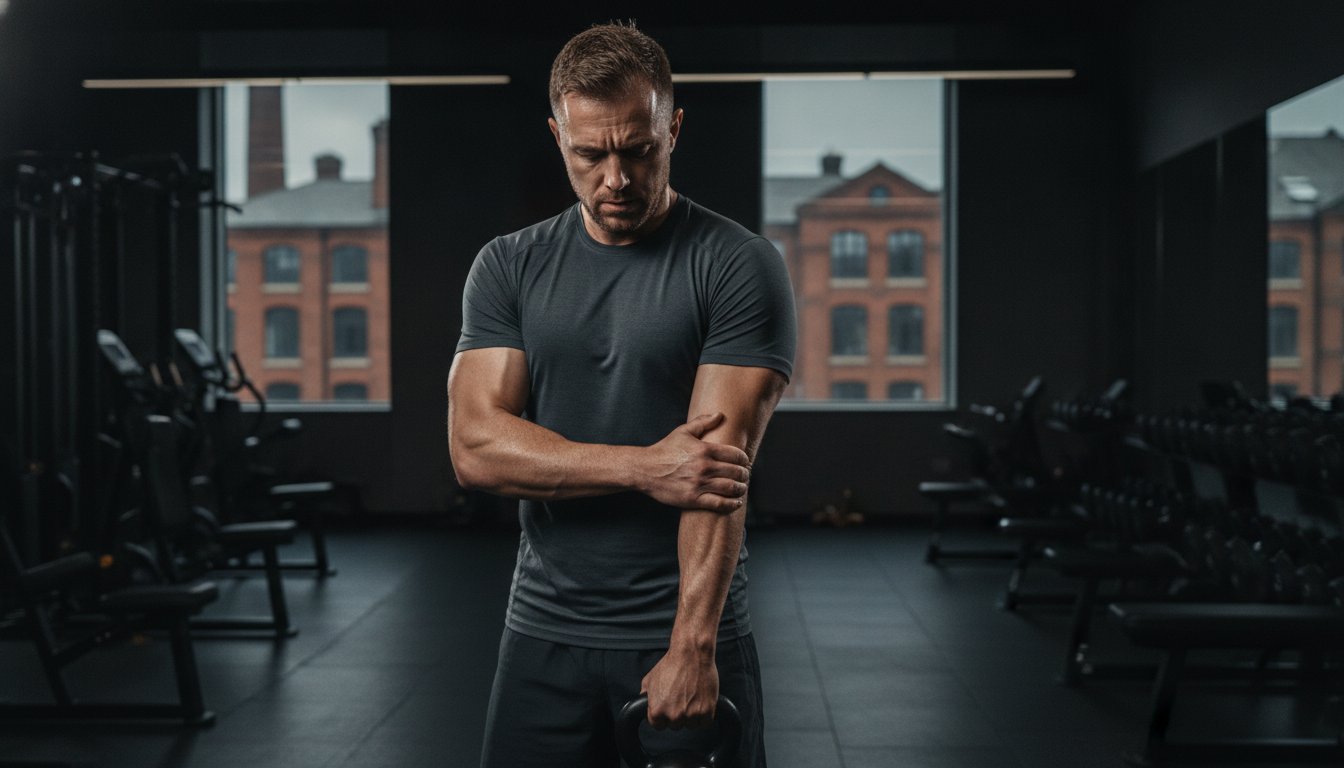
If you have been resting your arm for weeks only to find the sharp pain returns the moment you pick up a kettlebell, you are likely treating the symptom rather than the source. It is incredibly frustrating to feel like your progress has stalled while standard stretches and rest offer little more than temporary relief. You want to get back to the gym or the court without the nagging fear that your injury will eventually force you to stop altogether.
Choosing shockwave therapy for tennis elbow Liverpool is a decisive step toward breaking this cycle of chronic irritation. We understand that you are looking for more than just a temporary mask for the pain; you need a strategy that allows you to lift heavy and move with confidence again. By combining this advanced technology with a dedicated root cause approach, we can rapidly reduce your discomfort and restore the structural integrity of your tendon.
This article explains how shockwave therapy initiates a vital biological reset in damaged tissue. You will discover why addressing your specific movement patterns is the only way to move beyond symptom management and achieve a sustainable return to the activities you love.
Key Takeaways
- Learn why resting your arm often fails to heal damaged tendons and how to identify the signs of chronic degeneration.
- Discover how shockwave therapy for tennis elbow Liverpool uses high energy acoustic pulses to restart the natural healing process in stagnant tissue.
- Understand how hidden weaknesses in your shoulder or wrist may be the true culprits behind your recurring elbow pain.
- Get practical modifications for your gym routine and a specific isometric exercise to help manage pain immediately.
- See how a combined approach of technology and movement strategy ensures a sustainable return to heavy lifting and sports.
The Problem: Why your tennis elbow refuses to heal with rest alone
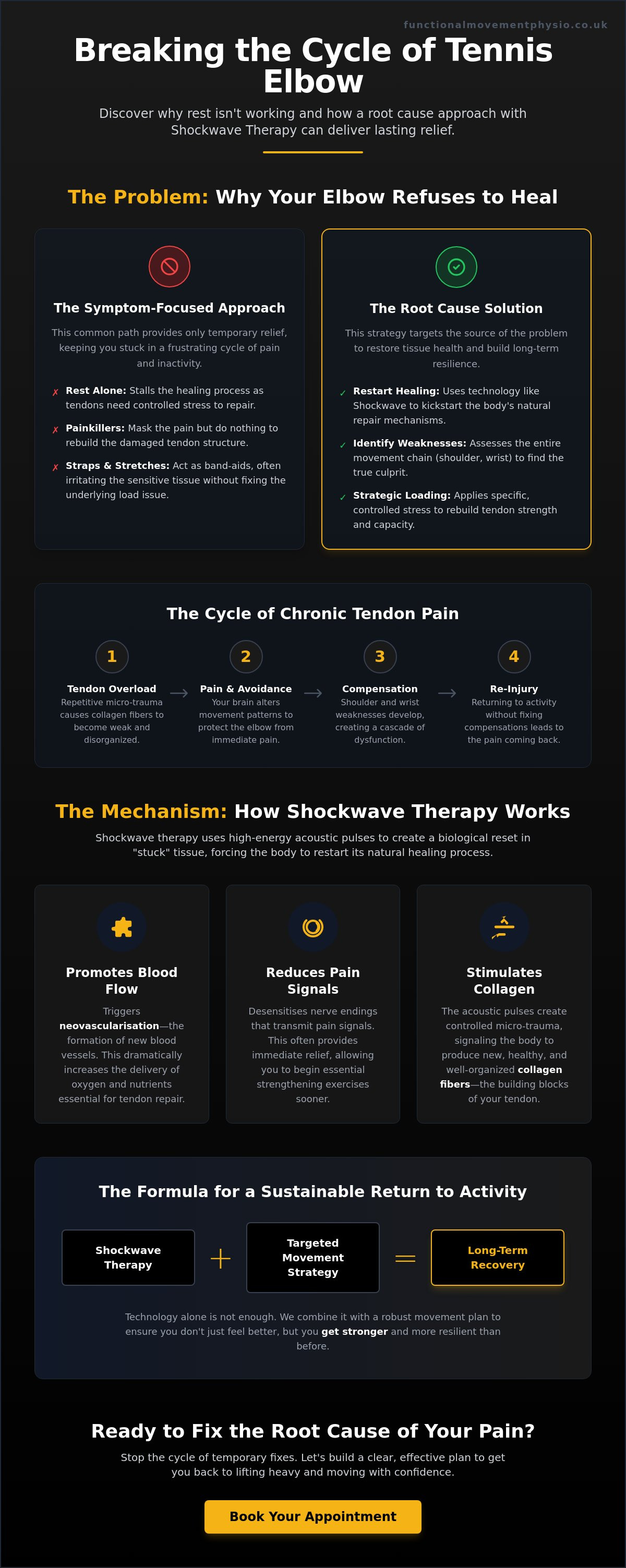
Tennis elbow, clinically known as lateral epicondylalgia, is far more complex than simple inflammation. It is a biological failure of the tendon to repair itself after repetitive micro-trauma or sudden overload. When you feel that sharp, burning pain on the outside of your elbow, it is a signal that the collagen fibers within the tendon have become disorganized and weakened. Simply stopping all activity and hoping it goes away rarely works. Tendons are unique tissues that require specific, controlled stress to stimulate repair. Without that stimulus, the healing process remains stalled.
The common "wait and see" approach often leads to a state of chronic degeneration rather than recovery. If you have been searching for shockwave therapy for tennis elbow Liverpool, you likely already know that traditional rest has not been enough to get you back to full strength. Anti-inflammatory medications might dull the ache for a few hours, but they do nothing to rebuild the structural integrity of the damaged tissue. Similarly, elbow straps are merely a mechanical band-aid. They change how force is distributed across the joint, but they do not address why the tendon was unable to handle the load in the first place.
The cycle of chronic tendon pain
Once pain becomes chronic, your body adapts in ways that hinder long term recovery. Your brain is highly efficient at avoiding discomfort, so it alters your movement patterns to protect the elbow. You might stop fully extending your arm or start recruiting your shoulder and wrist to compensate. While this saves you from immediate pain, it creates a cascade of dysfunction. You end up with a shoulder that lacks stability and a forearm that is perpetually tight, leading to the frustrating "good days and bad days" cycle where the pain returns the moment you increase your activity.
Why standard treatments often miss the mark
It is frustrating to feel stuck after following standard medical advice without seeing results. Corticosteroid injections are a frequent recommendation, yet they can be detrimental to long term tendon health by potentially causing further tissue breakdown. Passive stretching is another common pitfall. Pulling on a sensitive, degenerated tendon often increases irritation rather than promoting healing. This is why Extracorporeal shockwave therapy is a superior choice for those considering shockwave therapy for tennis elbow Liverpool. It moves beyond masking symptoms to change the biological environment of the tendon itself.
The Mechanism: How shockwave therapy restarts the healing process
Extracorporeal Shockwave Therapy (ESWT) is a non-invasive treatment that uses high energy acoustic pulses to target damaged tissue. Unlike an electrical shock, these are physical sound waves that travel through the skin to reach the deep layers of the tendon. For a tendon that has become "stuck" in a cycle of failed healing, these pulses provide a necessary biological kickstart. This intervention is supported by a Systematic Review of Shockwave Therapy, which confirms its effectiveness in reducing pain and improving grip strength for those struggling with persistent elbow issues.
One of the primary ways this technology works is through neovascularisation, which is the formation of new blood vessels. Tendons naturally have a very poor blood supply, which is why they heal so slowly compared to muscles. By forcing the body to grow new micro-vessels in the affected area, shockwave therapy significantly increases the delivery of oxygen and nutrients. This process is why shockwave therapy for tennis elbow Liverpool is such an effective tool for moving beyond simple symptom management and toward true tissue regeneration.
The therapy also works by desensitising the nerve endings that transmit pain signals to your brain. This often results in an immediate reduction in the sharp, localized pain you experience when lifting or gripping objects. It's a powerful way to lower your pain levels so you can begin the essential movement work required for a full recovery. If you're ready to move past the frustration of chronic pain, you can schedule your initial consultation to see if this technology is right for you.
Stimulating collagen and cellular repair
Shockwaves create controlled micro-trauma within the tendon. This isn't harmful; it is a specific signal that triggers the body’s natural repair cells. These cells ramp up the production of collagen, which is the primary structural protein needed to rebuild a strong, resilient tendon. This makes the treatment a highly effective, evidence-based alternative to more invasive surgical interventions. It allows you to address the damage at a cellular level without the risks or long recovery times associated with operations.
What to expect during your Liverpool shockwave session
When you attend a session for shockwave therapy for tennis elbow Liverpool, the process is efficient and professional. Each treatment typically lasts about 15 minutes, making it easy to fit into a busy schedule. You'll feel a rhythmic tapping or pulsing sensation as the device moves over the sensitive area. While you might feel some temporary discomfort, it's rarely described as painful, and we can adjust the intensity to your comfort level. Most patients require between 3 and 6 sessions to see the best results. There's no downtime required, so you can return to your daily activities immediately after leaving the clinic.
The Root Cause Approach: Why shockwave needs a movement strategy
Many clinics position shockwave as a standalone miracle cure, but we view it as one essential part of a comprehensive recovery plan. If you only treat the elbow without asking why it became overloaded in the first place, the pain is likely to return once you resume your normal training volume. In our philosophy, the elbow is frequently the victim of dysfunction elsewhere in the kinetic chain rather than the primary culprit. Lasting relief comes from understanding the relationship between your joints and your movement habits.
When you choose shockwave therapy for tennis elbow Liverpool at our clinic, we look beyond the local site of pain. We examine how your shoulder stabilizes during a lift and whether your wrist flexors are over-compensating for weakness elsewhere. According to the NICE guidance for tennis elbow, shockwave is a safe and recognized intervention for chronic tendon issues. However, its true power is unlocked when it is used to create a window of opportunity for high quality rehabilitation. By reducing your pain, we make it possible for you to perform the strengthening exercises that are vital for long term tendon health.
Identifying your specific overload triggers
Recovery requires a deep dive into your daily habits and training technique. We assess your grip mechanics to see if you are over-recruiting the lateral extensors during gym movements like rows or curls. Often, a lack of thoracic mobility, which is stiffness in your upper back, forces the arm to compensate, placing excessive stress on the elbow tendon. Whether it's your desk setup or your sports technique, we identify the exact triggers that led to your injury so we can fix them for good.
Integrating shockwave with functional physiotherapy
We pair Extracorporeal Shockwave Therapy with a tailored strength and conditioning plan. This isn't about doing generic stretches that might actually irritate the tendon further. Instead, we focus on progressive loading to rebuild the structural integrity of the tissue. This is where Expert Physiotherapy Liverpool makes the difference. We don't just manage your symptoms; we help you master the movement patterns required for peak performance.
Our goal is to guide you through clear functional milestones. We monitor your progress from pain-free gripping in daily life to a full, sustainable return to heavy lifting or sport. This integrated approach ensures that when you complete your course of shockwave therapy for tennis elbow Liverpool, you aren't just masking an issue. You are physically more resilient and capable of handling the activities you love without the fear of relapse.
Actionable Advice: Realistic steps for long term elbow health
While shockwave therapy for tennis elbow Liverpool provides the biological reset your tendon needs, your daily habits determine how well that new tissue matures. You can start managing your pain immediately by performing a simple isometric wrist extension. Sit with your forearm supported on a table with your wrist hanging off the edge. Use your other hand to lift your palm into a neutral position, then hold it there against resistance for 30 to 45 seconds. This exercise helps desensitise the tendon and provides a natural analgesic effect without further irritating the tissue.
When you return to the gym, small adjustments make a significant difference. Avoid using a "death grip" on dumbbells or barbells. Instead, try a thumbless grip or use lifting straps to reduce the demand on your forearm extensors during heavy pulling movements. If rows or curls trigger a sharp pain, switch to a neutral grip where your palms face each other to shift the load. Total rest is rarely the answer. Tendons need a reason to get stronger, so we focus on progressive loading rather than complete inactivity.
If you are unsure how to modify your specific routine to avoid further injury, book an initial consultation to receive a personalized movement plan that works alongside your clinical treatment.
Managing your training load
We encourage you to use a pain scale of 0 to 10 to guide your activity levels. It is generally safe to train if your pain remains below a 3 or 4 during the exercise and returns to your baseline within 24 hours. This concept of relative rest allows local Liverpool athletes to stay in the gym while their injury heals. If the pain lingers the next morning or feels sharper, it is a sign that the load was too high. You don't need to stop moving entirely. You just need to adjust the volume or intensity of your session.
Supporting the tendon through lifestyle
For those working in Liverpool city centre, your desk setup is a common contributor to persistent elbow stress. Ensure your keyboard and mouse are at a height that allows your wrists to remain neutral rather than cocked back. These small ergonomic shifts prevent the constant low level tension that keeps a tendon sensitive. These lifestyle adjustments complement the biological changes initiated by shockwave therapy for tennis elbow Liverpool, ensuring your results are sustainable.
Additionally, staying hydrated and prioritising a diet rich in vitamin C and protein supports the collagen synthesis triggered by your treatment. If you also experience discomfort on the inside of your arm, our Golfer’s Elbow Specialist Liverpool guide provides similar root cause insights for medial elbow pain.
Professional Support: Booking your shockwave therapy in Liverpool
Resolving chronic tendon pain requires a strategy that goes beyond the surface. While many providers offer technology as a standalone fix, we believe the most effective path forward is a sophisticated blend of advanced clinical intervention and movement optimization. By combining shockwave therapy for tennis elbow Liverpool with a dedicated root cause approach, we don't just quieten your symptoms. We rebuild the structural integrity of your arm and address the biomechanical failures that led to the injury in the first place.
You should stop settling for the temporary relief offered by generic rest or standard treatment that fails to progress. Persistent pain is not something you have to manage for the rest of your life. It is a biological signal that your body needs a specific, evidence-based reset to restart the healing process. Our clinic is dedicated to helping you transition from physical limitation back to peak performance, ensuring you can return to purposeful movement without the constant fear of a relapse.
Your roadmap to full recovery
Your journey begins with an Initial Physiotherapy Consultation at Functional Movement Physio. During this session, we conduct a comprehensive evaluation that extends far beyond the local site of pain. We examine your grip mechanics, shoulder stability, and thoracic mobility to identify the exact triggers of your tendon overload. This thorough assessment is the foundation of your recovery, allowing us to build a bespoke treatment plan tailored to your specific lifestyle and athletic goals.
Once we understand the root cause, we integrate Shockwave Therapy into your sessions to provide the necessary biological stimulus for repair. We are located in the heart of the city and remain deeply committed to supporting local active people, from gym-goers to competitive athletes. We don't believe in one-size-fits-all solutions; we believe in a partnership where we provide the expertise and you gain the capabilities to master your own physical health.
Take the first step today
If you are frustrated by slow progress or the recurring nature of your injury, it is time for a professional response that addresses the source of the problem. Choosing shockwave therapy for tennis elbow Liverpool is a proactive step toward reclaiming your strength and your confidence in the gym or on the court. We invite you to book an appointment for a full assessment and take the first step toward a sustainable recovery.
Do not let another month pass where you are forced to avoid the activities you love. Our goal is the restoration of full, purposeful movement in your daily life, providing you with the resilience needed for long-term success. Master your capabilities and move beyond pain today.
Reclaim Your Strength and Purposeful Movement
Persistent elbow pain shouldn't be a permanent barrier to your training or daily life. You now understand that recovery requires moving beyond temporary fixes and addressing the biological stagnation of the tendon. By choosing shockwave therapy for tennis elbow Liverpool, you are utilizing a powerful tool to restart the repair process and build a more resilient physical foundation.
Our specialist clinic focuses on root cause resolution, ensuring that your treatment plan accounts for the biomechanical triggers that caused your injury. With an expert team experienced in sports injury rehabilitation and evidence-based shockwave therapy protocols, we provide the structure and support needed for a sustainable return to peak performance.
It's time to stop managing symptoms and start mastering your physical capabilities. Book your initial consultation and shockwave assessment in Liverpool today to begin your journey back to the activities you love. We are ready to partner with you to achieve lasting results and full, purposeful movement.
Frequently Asked Questions
Is shockwave therapy for tennis elbow painful?
Shockwave therapy is generally described as a rhythmic tapping or pulsing sensation that may feel uncomfortable but is rarely painful. We monitor your response throughout the session and can adjust the energy levels to suit your comfort. Most patients find the brief discomfort easily manageable since the treatment only lasts around 15 minutes.
How many sessions of shockwave therapy will I need for tennis elbow?
A typical course of treatment involves between 3 and 6 sessions. These are usually scheduled once a week to allow your body time to respond to the biological stimulus. While some people notice changes after the first visit, the cumulative effect of multiple sessions is what drives long term tendon repair.
Can I go to the gym after a shockwave therapy session?
You can return to your normal daily routine immediately, though we advise avoiding heavy gym sessions for 48 hours after treatment. This window allows the initial healing response to settle without being disrupted by excessive load. We will provide specific guidance on how to adapt your training during your course of shockwave therapy for tennis elbow Liverpool.
What is the success rate of shockwave therapy for tennis elbow?
Clinical research indicates that success rates for shockwave therapy in chronic tendon issues often range between 70% and 80%. These outcomes are most sustainable when the therapy is paired with a functional rehabilitation plan. Addressing the underlying movement patterns ensures the tendon isn't simply patched up but is actually capable of handling future loads.
How quickly will I feel results after shockwave treatment?
Many patients experience a noticeable reduction in pain shortly after their first or second session. This is often due to the immediate desensitization of local nerve endings. However, the deeper structural changes and collagen synthesis required for a full recovery take place over several weeks as the tissue regenerates.
Is shockwave therapy better than a cortisone injection for elbow pain?
Shockwave therapy is frequently a better long term option than cortisone because it promotes actual tissue healing. While cortisone injections can provide rapid temporary relief, they don't fix the underlying degeneration and may even weaken the tendon structure. Shockwave offers a non-invasive way to build lasting resilience instead of just hiding the pain.
Do I need a GP referral for shockwave therapy in Liverpool?
You don't need a GP referral to book shockwave therapy for tennis elbow Liverpool at our clinic. We provide a full initial assessment to ensure the treatment is safe and appropriate for your specific condition. This direct access allows you to start your recovery journey sooner and avoid the frustration of long waiting lists.
What happens if shockwave therapy does not work for my elbow?
If your symptoms don't resolve with shockwave alone, we revisit your movement assessment to find hidden biomechanical triggers. We might integrate other services like medical acupuncture or Clinical Pilates to further support your recovery. Our commitment is to find a path that gets you back to full capacity, even if the first intervention needs adjustment.